U.S. Cotton Trust Protocol 2024-25 Annual Report
November 2025. The U.S. Cotton Trust Protocol’s five-year milestone annual report demonstrates measurable progress toward a more sustainable, transparent and resilient cotton supply chain.
Read moreNovember 2025. The U.S. Cotton Trust Protocol’s five-year milestone annual report demonstrates measurable progress toward a more sustainable, transparent and resilient cotton supply chain.
Read moreThe U.S. Cotton Trust Protocol, the leading program for responsibly grown U.S. cotton, has published its latest annual report highlighting increased membership and significant sustainability progress against a 2015 baseline.
Read moreThe U.S. Cotton Trust Protocol has achieved its sixth consecutive year of growth. The voluntary sustainability program for U.S. cotton now represents 18% more acres and 14% more growers than in 2024.
Read moreURBN, the parent company of fashion brands such as Urban Outfitters and Anthropologie, has joined the U.S. Cotton Trust Protocol, a voluntary sustainability program and traceability platform.
Read moreOctober 2024. An update on the Trust Protocol over the past 12 months. The report covers grower participation and progress across key sustainability metrics, from resource efficiency to soil health
Read moreThe U.S. Cotton Trust Protocol (Trust Protocol), a voluntary program for responsibly grown cotton, reached new heights in 2023-2024, with record grower participation and significant strides in environmental stewardship.
Read moreThe U.S. Cotton Trust Protocol, a voluntary, farm-level sustainability program, has tripled its membership in just three years while delivering continuous sustainability improvements. According to its third annual report, growers […]
Read moreTakes Top Honors in Field to Market Sustainability Leadership Awards The U.S. Cotton Trust Protocol and Cotton Incorporated have received top honors in Field to Market’s 2023 Sustainability Leadership Awards. […]
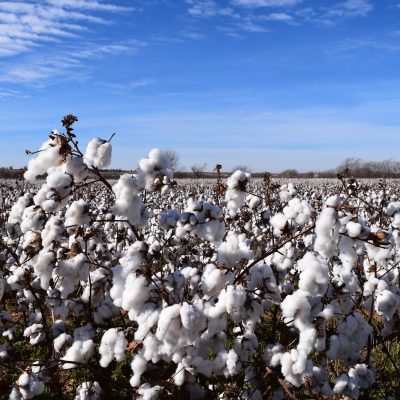
Read moreLouisiana is famous for many things – its Creole cuisine, bayous, alligators, and jazz scene are legendary. But, unbeknown to many, it is also an agricultural powerhouse, the premier gateway […]
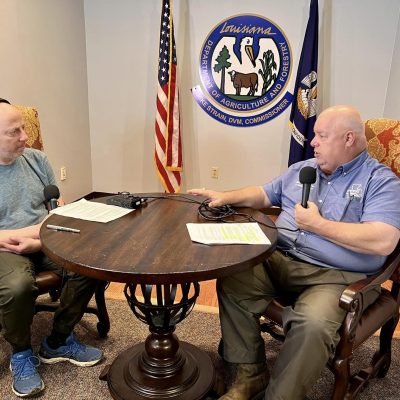
Read moreSoil is the basis of farmers’ livelihoods, which is why U.S. Cotton Trust Protocol growers are committed to protecting it through regenerative practices from cover cropping to no-till cultivation.
Read more
November 2025. The U.S. Cotton Trust Protocol’s five-year milestone annual report demonstrates measurable progress toward a more sustainable, transparent and resilient cotton supply chain.
Read more
The U.S. Cotton Trust Protocol, the leading program for responsibly grown U.S. cotton, has published its latest annual report highlighting increased membership and significant sustainability progress against a 2015 baseline.
Read more
The U.S. Cotton Trust Protocol has achieved its sixth consecutive year of growth. The voluntary sustainability program for U.S. cotton now represents 18% more acres and 14% more growers than in 2024.
Read more
URBN, the parent company of fashion brands such as Urban Outfitters and Anthropologie, has joined the U.S. Cotton Trust Protocol, a voluntary sustainability program and traceability platform.
Read more
October 2024. An update on the Trust Protocol over the past 12 months. The report covers grower participation and progress across key sustainability metrics, from resource efficiency to soil health
Read more
The U.S. Cotton Trust Protocol (Trust Protocol), a voluntary program for responsibly grown cotton, reached new heights in 2023-2024, with record grower participation and significant strides in environmental stewardship.
Read more
The U.S. Cotton Trust Protocol, a voluntary, farm-level sustainability program, has tripled its membership in just three years while delivering continuous sustainability improvements. According to its third annual report, growers […]
Read more
Takes Top Honors in Field to Market Sustainability Leadership Awards The U.S. Cotton Trust Protocol and Cotton Incorporated have received top honors in Field to Market’s 2023 Sustainability Leadership Awards. […]
Read more
Louisiana is famous for many things – its Creole cuisine, bayous, alligators, and jazz scene are legendary. But, unbeknown to many, it is also an agricultural powerhouse, the premier gateway […]
Read more
Soil is the basis of farmers’ livelihoods, which is why U.S. Cotton Trust Protocol growers are committed to protecting it through regenerative practices from cover cropping to no-till cultivation.
Read more
Read the latest USSA Insight Paper: Water Stewardship in U.S. Agriculture
Read more
What does 2026 hold in store for U.S. Soy, given macro trends, shifting business dynamics, policy changes and long-term investments? Jim Sutter, CEO of the U.S. Soybean Export Council, highlights the forces he believes will shape U.S. soybean exports this year.
Read more
Jennifer Wilson, policy advisor, reflects on the U.S. Sustainability Alliance’s recent outbound mission to Europe.
Read more
As almond blossoms cover the landscape in California’s Central Valley, honeybees arrive from across the United States.
Read more

December 2025: A flagship FAO report highlighting the growing toll of disasters on agriculture. It emphasizes the importance of prevention and the role of digital tools in building resilience across food systems.
Download now
November 2025. The U.S. Cotton Trust Protocol’s five-year milestone annual report demonstrates measurable progress toward a more sustainable, transparent and resilient cotton supply chain.
Download now
November 2025: A flagship FAO report highlighting the growing toll of disasters on agriculture. It emphasizes the importance of prevention and the role of digital tools in building resilience across food systems.
Download now
November 2025. A comprehensive data publication presenting key trends in agriculture, food security and environmental impact.
Download now
Read the latest USSA Insight Paper: Water Stewardship in U.S. Agriculture
Read more
Matt Splitter, Field to Market’s 2025 Farmer of the Year, and his wife Janna manage around 5,260 hectares (13,000 acres) in Sterling, Kansas.
Read more

Researchers at North Carolina (NC) State University are set to give agricultural leftovers a second life, creating new business opportunities.
Read more

A $700 million Regenerative Pilot Program has been introduced to help American farmers adopt practices that improve soil health, water quality and long-term productivity, while strengthening America’s food and fiber supply.
Read more
Whilst the USSA members work to exceed regulatory requirement, U.S. laws and regulations provide a robust framework, developed over many years, to ensure and promote the sustainability of its crop, livestock, seafood and forestry sectors. The policies look to immediate impacts on the environment and beyond to cover topics from employment to biodiversity to endangered species. The following pages provide context and an introduction to key federal legislation.
Focused on conservation and environmental stewardship, the USDA, working with The Natural Resources Conservation Service on technical assessment and the Farm Service Agency for enforcements, uses grant management to deliver best practice. A particular focus is on erodible lands and wetlands, with ‘sodbuster’ and ‘swampbuster’ rules, requires presentation of conservation strategies prior to conversion of lands to agricultural use. One result, that soil loss has been halved since 1982.
The U.S. recognizes that sustainability has many facets and action is required in explicit areas. This has resulted in the enactment of a wide range of laws from the Clean Water Act and Clean Air Act to the Endangered Species Act, to research and regulatory action on Insecticides and Fungicides and Rodenticide Act; and, with the Lacey Act a focus on illegal trafficking of plants, fish and animals.
In the latest episode of This is U.S. Sustainability, we hear from two multi-generational farmers – an eleventh-generation grains farmer from Maryland and the owner of a centennial cattle farm in Louisiana – about how they have moved with the times while staying true to their roots. We cover rotational grazing, no-till cultivation, water conservation, biotech seeds, and more. And we discuss why going back to the natural cycle is sometimes the best approach.
Tune in to the latest episode of This is U.S. Sustainability to hear how Paul Catanzaro and Professor Tony D’Amato work together to reach family forest owners and ensure they have the information and resources to make the right decisions about their land. And learn about the vital role Tim Stout, a Vermont landowner, plays in amplifying their message.
Tune in for the lowdown on the innovative, often surprising ways the almond industry and the wider food sector are reducing waste. Jet fuel, beer, water filters and peat moss to grow mushrooms – these are just some of the many applications in use and under development.
Discover how softwoods were used in the architecture of PDX Main Terminal, Portland, Oregon, in this new series from the Softwood Export Council.
Watch nowThis new series from the Softwood Export Council spotlights the global reach and versatility of American softwoods in architecture, offering a behind-the-scenes look at sustainable forestry practices.
Watch nowThis new series from the American Feed Industry Association explores the $267 billion U.S. animal food industry, offering insights into its scale and impact.
Watch now