U.S. Wheat Sustainability is In the Details
When it comes to analyzing the sustainability of agricultural crops there is a tendency to apply generalized metrics or standards to a wide swath of scenarios.
Read moreWhen it comes to analyzing the sustainability of agricultural crops there is a tendency to apply generalized metrics or standards to a wide swath of scenarios.
Read moreBy Elizabeth Westendorf A rapidly emerging food marketing trend is the concept of “sustainable production.” Sustainability is not clearly defined and therefore means something different to each participant in the […]
Read moreThe stakes are high in this game for industry impact and environmental protection, and this creates challenges for producers. U.S. farmers are committed to continuous improvement, and that is why U.S. wheat industry organizations are actively engaged in relevant sustainability initiatives.
Read moreUSSA News: U.S. climate trends, USSA’s EU mission and a Maine buckwheat success story
Read moreUSSA News: This month, we take you to New England for an update on our press trip to Maine and Massachusetts, a collaboration with Food Export-Northeast.

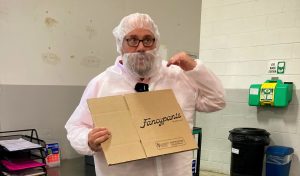
Read moreArriving at Fancypants Baking Co.’s unassuming facility in Walpole, Massachusetts, you are greeted by the sweet, buttery aroma of baking. However, there is much more to the company than delicious-smelling cookies.

Read moreEight journalists. Five days. Fourteen operations. That is a snapshot of the recent U.S. Sustainability Alliance press trip to Maine and Massachusetts.
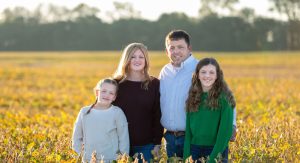
Read moreIn Jackson County, northeast Arkansas, a legacy of sustainable agriculture has endured for five generations.
Read moreField to Market: The Alliance for Sustainable Agriculture® has received a two-year grant of $700,000 from the Walton Family Foundation.
Read moreIn 2024, the value of U.S. agricultural exports reached $176 billion, the third-highest total on record. The European Union (EU) emerged as the fourth-largest market for these exports, with tree nuts ranking as the top export commodity in the region.
Read more
When it comes to analyzing the sustainability of agricultural crops there is a tendency to apply generalized metrics or standards to a wide swath of scenarios.
Read more
By Elizabeth Westendorf A rapidly emerging food marketing trend is the concept of “sustainable production.” Sustainability is not clearly defined and therefore means something different to each participant in the […]
Read more
The stakes are high in this game for industry impact and environmental protection, and this creates challenges for producers. U.S. farmers are committed to continuous improvement, and that is why U.S. wheat industry organizations are actively engaged in relevant sustainability initiatives.
Read more
USSA News: U.S. climate trends, USSA's EU mission and a Maine buckwheat success story
Read more
USSA News: This month, we take you to New England for an update on our press trip to Maine and Massachusetts, a collaboration with Food Export-Northeast.
Read more
Arriving at Fancypants Baking Co.’s unassuming facility in Walpole, Massachusetts, you are greeted by the sweet, buttery aroma of baking. However, there is much more to the company than delicious-smelling cookies.
Read more
Eight journalists. Five days. Fourteen operations. That is a snapshot of the recent U.S. Sustainability Alliance press trip to Maine and Massachusetts.
Read more
In Jackson County, northeast Arkansas, a legacy of sustainable agriculture has endured for five generations.
Read more
Field to Market: The Alliance for Sustainable Agriculture® has received a two-year grant of $700,000 from the Walton Family Foundation.
Read more
In 2024, the value of U.S. agricultural exports reached $176 billion, the third-highest total on record. The European Union (EU) emerged as the fourth-largest market for these exports, with tree nuts ranking as the top export commodity in the region.
Read more
Jennifer Wilson, policy advisor, reflects on the U.S. Sustainability Alliance’s recent outbound mission to Europe.
Read more
As almond blossoms cover the landscape in California’s Central Valley, honeybees arrive from across the United States.
Read more
Land-grant universities were established by President Lincoln through the Morrill Act of 1862.
Read more
Can agriculture meet the demands of a growing world population while ensuring environmental sustainability? Daniel Lapidus, Director of Sustainable Agriculture and Food Systems at RTI International, highlights important trends on both the supply and demand sides that suggest we are heading in the right direction.
Read more

November 2025. A comprehensive data publication presenting key trends in agriculture, food security and environmental impact.
Download now
November 2025. An expert paper providing an in-depth analysis of current technologies, economic considerations and policy implications for scaling precision irrigation.
Download now
October 2025. A global policy brief exploring how countries can address labour shortages in farming by rethinking how agriculture is perceived, supported and structured.
Download now
October 2025. A flagship report tracking trends in global agricultural productivity and introducing a new model to identify strategies for sustained growth.
Download now
USSA News: U.S. climate trends, USSA's EU mission and a Maine buckwheat success story
Read more
When Karen Getz, a former dairy farmer and award-winning cheesemaker in Vermont, struggled to find gluten-free crackers worthy of pairing with her cheese, she decided to make her own.
Read more
Historical hourly weather data has given researchers a clearer picture of climate trends in the U.S.
Read more
As rising temperatures, unpredictable rainfall and more frequent and prolonged droughts create uncertainty for farmers and threaten agricultural yields, precision irrigation offers a “science-driven solution” for sustainably feeding a growing population.
Read more
Whilst the USSA members work to exceed regulatory requirement, U.S. laws and regulations provide a robust framework, developed over many years, to ensure and promote the sustainability of its crop, livestock, seafood and forestry sectors. The policies look to immediate impacts on the environment and beyond to cover topics from employment to biodiversity to endangered species. The following pages provide context and an introduction to key federal legislation.
Focused on conservation and environmental stewardship, the USDA, working with The Natural Resources Conservation Service on technical assessment and the Farm Service Agency for enforcements, uses grant management to deliver best practice. A particular focus is on erodible lands and wetlands, with ‘sodbuster’ and ‘swampbuster’ rules, requires presentation of conservation strategies prior to conversion of lands to agricultural use. One result, that soil loss has been halved since 1982.
The U.S. recognizes that sustainability has many facets and action is required in explicit areas. This has resulted in the enactment of a wide range of laws from the Clean Water Act and Clean Air Act to the Endangered Species Act, to research and regulatory action on Insecticides and Fungicides and Rodenticide Act; and, with the Lacey Act a focus on illegal trafficking of plants, fish and animals.
In the latest episode of This is U.S. Sustainability, we hear from two multi-generational farmers – an eleventh-generation grains farmer from Maryland and the owner of a centennial cattle farm in Louisiana – about how they have moved with the times while staying true to their roots. We cover rotational grazing, no-till cultivation, water conservation, biotech seeds, and more. And we discuss why going back to the natural cycle is sometimes the best approach.
Tune in to the latest episode of This is U.S. Sustainability to hear how Paul Catanzaro and Professor Tony D’Amato work together to reach family forest owners and ensure they have the information and resources to make the right decisions about their land. And learn about the vital role Tim Stout, a Vermont landowner, plays in amplifying their message.
Tune in for the lowdown on the innovative, often surprising ways the almond industry and the wider food sector are reducing waste. Jet fuel, beer, water filters and peat moss to grow mushrooms – these are just some of the many applications in use and under development.
Discover how softwoods were used in the architecture of PDX Main Terminal, Portland, Oregon, in this new series from the Softwood Export Council.
Watch nowThis new series from the Softwood Export Council spotlights the global reach and versatility of American softwoods in architecture, offering a behind-the-scenes look at sustainable forestry practices.
Watch nowThis new series from the American Feed Industry Association explores the $267 billion U.S. animal food industry, offering insights into its scale and impact.
Watch now