

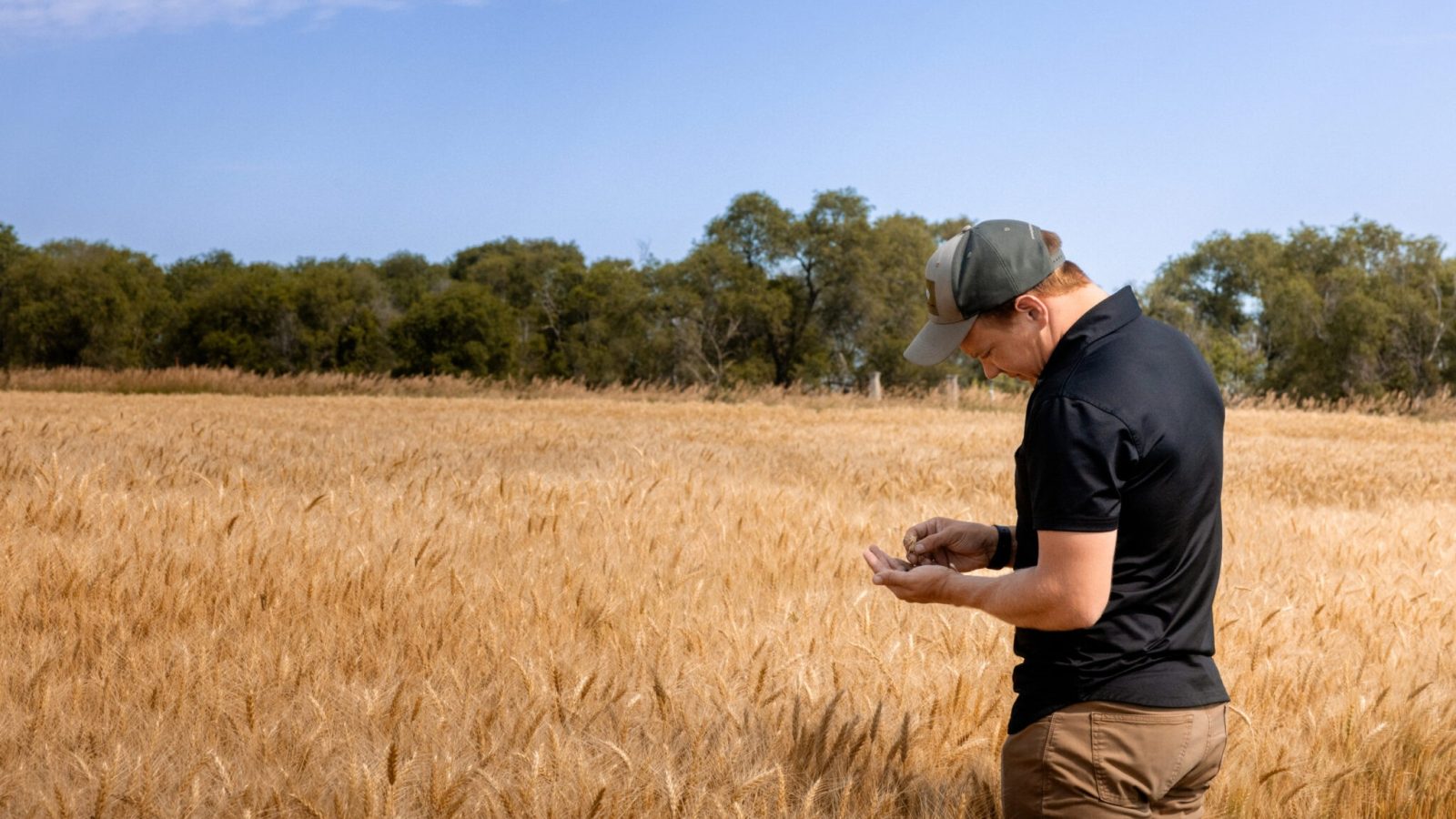
At Jorgensen Land & Cattle in Ideal, South Dakota, innovation and tradition go hand in hand. While the operation embraces the latest techniques and technologies, owner Nick Jorgensen says it always stay true to its roots as a family farm dating back to 1909. Nick hopes to pass on the business to his four sons in even better shape than when he took it on. How does he plan to achieve this? By being a good steward of the land and protecting the farm’s most precious resource: the soil.
Jorgensen Land & Cattle’s primary business is livestock, but its farming operation is equally critical to its success, and it maintains a diverse rotation with winter wheat as the primary crop.
“Without winter wheat in our rotation, it would be very difficult for us to do some of the things we do – even from a livestock feeding perspective,” says Nick.
Ultimately, none of this would be possible without healthy soil. Nick explains that managed grazing helps improve soil health by increasing organic matter. To support this, the operation has adopted virtual fencing, which uses GPS-enabled collars on livestock to supplement physical infrastructure. This allows for much more precise and adaptive grazing practices.
“The virtual fencing collars enable about another 6,000 acres (more than 2,400 hectares) of grazing on our property that wouldn’t otherwise be possible due to the lack of physical infrastructure,” Nick explains.
To learn more about Jorgensen Land & Cattle’s commitment to soil health and the environment, watch Stories of Stewardship – a video series from U.S. Wheat Associates.