


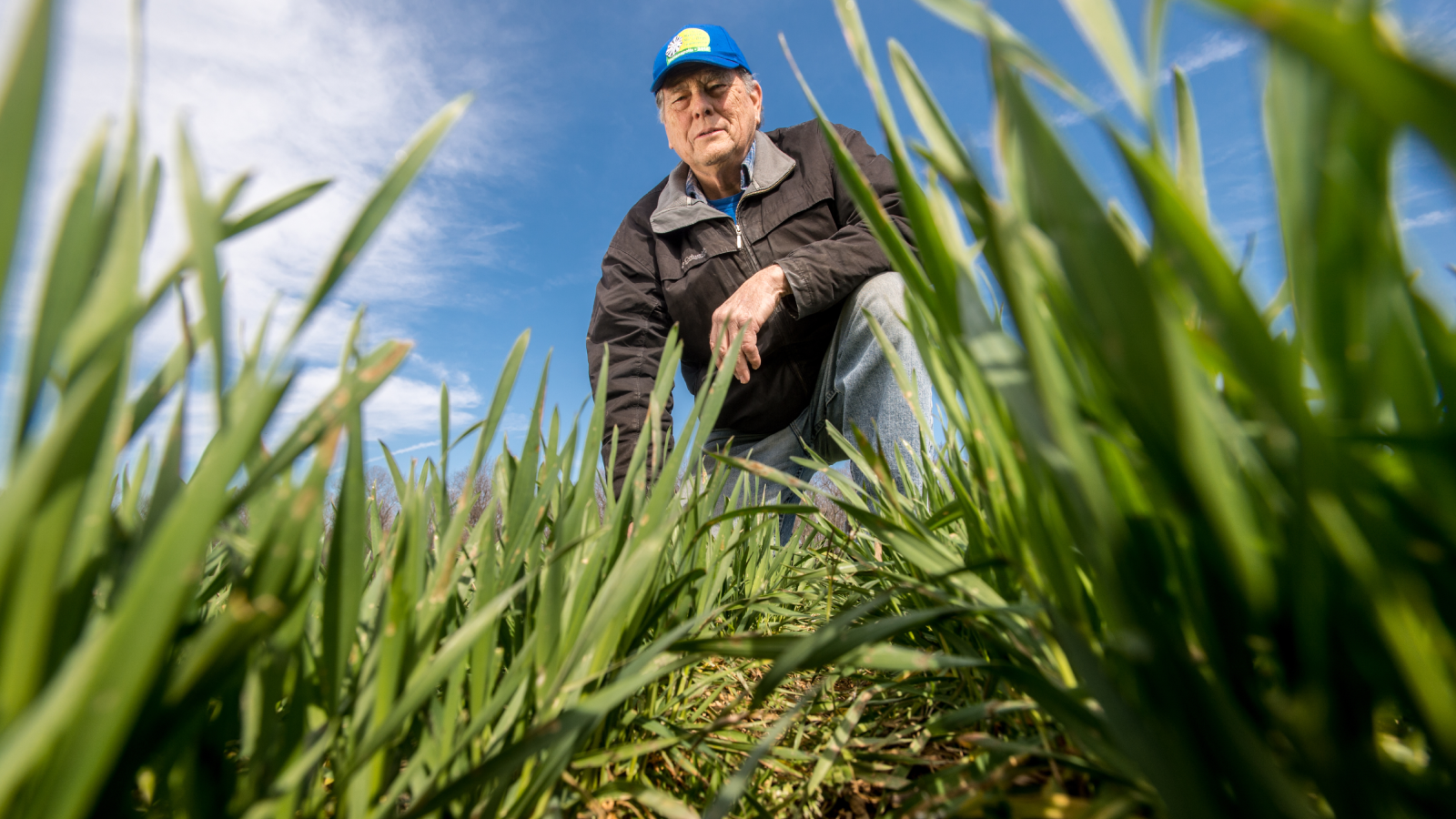
Interest in cover crops remains high among American producers and is expected to continue, according to the 2026 National Cover Crop Report. Sixty-eight percent of farmers said they use cover crops every year. Despite a challenging 2025 growing season and uncertainty in commodity markets, cover crop acreage is steadily rising. Users planted an average of 398 acres in 2025 and anticipate crossing the 400-acre barrier in 2026.
These findings are based on an online survey of 657 farmers across 46 U.S. states and Puerto Rico, conducted by the Conservation Technology Information Center (CTIC), USDA Sustainable Agriculture Research and Education (SARE) program, and American Seed Trade Association (ASTA). The survey captured farmers’ views on adopting cover crops, including their hopes, concerns, perceived costs and benefits and opinions on related incentives.
Production Benefits
Farmers report yield increases of 3.5 bushels per acre of corn and 1.4 bushels of soybeans per acre following cover crops.
Better weed control was also cited by close to a third (31.2%) of users, and by 87% of the growers who “planted green” – seeding cash crops into an actively growing cover crop.
One in three cover crop users reported grazing cover crops or harvesting them for livestock consumption. Three-quarters (77%) of those who grazed cover crops said it improved their profitability.
Cover Crop Use Isn’t Binary
A key finding of the report is that the use of cover crops is often intermittent, not simply a matter of being a user or a non-user. “Though many fans of cover crops can’t imagine not using them, other farmers choose whether or not to plant covers based on economics, field conditions, crop rotations or other factors,” says Ryan Heiniger, executive director of CTIC and a farmer who uses cover crops on his southeast Iowa farm. “We’ve learned, and through this survey, confirmed, that intermittent use of cover crops can be a dynamic decision, not an abandonment of the practice or its principles.”
More than 60% of cover crop users said there were years when they didn’t use cover crops, mainly because of late harvest of cash crops, poor conditions for planting cover crops or a lack of time and labor. Three-quarters (74%) of non-users were open to trying cover crops.
The Right Incentives Can Help
While many cover crop users don’t benefit from financial incentives, this year’s survey indicates that well-designed incentive programs can help encourage adoption of the practice.
Of 256 cover crop users in the survey who reported receiving an incentive payment for cover crops in 2025, only 4.7% said they probably would not continue using cover crops beyond the terms of their incentive program.
Only around a fifth (21.6%) of former or intermittent cover crop users reported receiving incentive payments. Of these, 70% said the payments encouraged them to try cover crops by reducing financial risk or offsetting costs. None of the past users cited issues with the incentive program as a reason for discontinuing cover crops.
Technology Gains Momentum, Drives Adoption
Interest in using drones for cover crop seeding or termination is gaining momentum, used by 16.3% of cover crop users. While modest, this represents a surge in interest; as recently as the 2023 National Cover Crop Report, only one in 553 cover crop users reported seeding covers with a drone.
The survey also found that virtual fencing may make grazing cover crops more appealing as growers become familiar with the technology. Of the 80 producers already using or interested in virtual fencing, half said they would significantly increase cover crop grazing if the technology proved labor-saving and cost-effective.