

By Kent Swisher, President & CEO of the North American Renderers Association (NARA)
There is more to the food we eat than what’s on our plates. Behind every nutritious nut or juicy steak lies a trail of shells, hulls, bones, fats, skin and other materials (aka byproducts) that are often thrown away. With nearly 1.9 million farms in the United States, the potential for such waste is staggering. Discarding these leftovers doesn’t just contribute to landfills and greenhouse gas emissions — it also represents a missed opportunity. As industries from almonds to beef are discovering, what may be considered waste can become valuable products that are good for business and the environment.
Under-the-radar Animal Byproducts
No one understands this better than the U.S. rendering industry. In the United States, roughly 50% of an animal is considered inedible, including certain fats, bones and proteins. Rendering reclaims an estimated 99% of this material, transforming it into ingredients for countless products. It does the same with used cooking oil from restaurants.
Even if you’ve never heard of rendering, chances are you use products containing rendered ingredients. The so-called ‘Big 4’ markets for rendered materials are: pet food and animal feed; fuel; oleochemical products (soaps, lubricants and industrial chemicals); and fertilizer. But this is just the tip of the iceberg.
Rendered fat is found in cosmetics and personal hygiene products, candles, household soap, plastics, fuel and more. Internal tissues and organs are used to make strings for musical instruments and tennis rackets; bones are used for charcoal and glass; and blood components go into inks and dyes.
Discussing animal byproducts may seem unsavory, but without rendering, it is estimated that U.S. landfills would be full in four years. This under-the-radar industry reduces food waste, reclaims billions of gallons of clean water, returning it to rivers and streams, and sequesters five times the emissions it produces.
Second Life for Crop Waste
Opportunities to rethink waste are everywhere. Crop production also generates diverse byproducts, including stalks, hulls, cobs and peels, which often enjoy a second life as animal feed, fertilizer and fuel.
In the dairy industry, for example, forward-thinking operations use crop residues, along with other farm and food waste, to produce renewable energy and biofertilizer through anaerobic digestion. These outputs can power the farm and enrich the soil, creating closed-loop systems that minimize and reuse waste.
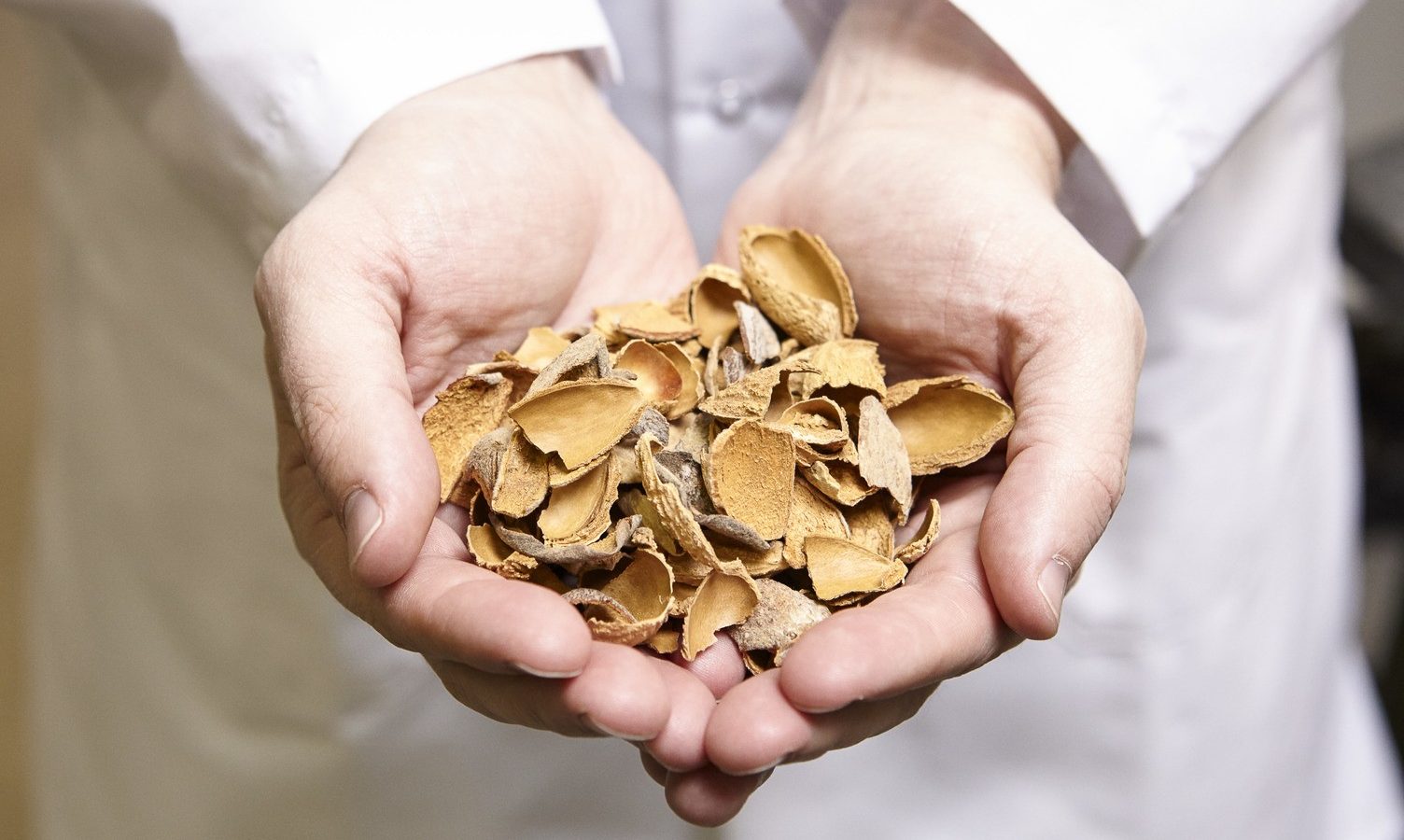
Beyond these established applications, ongoing innovation continues to unlock value from agricultural byproducts. As part of its commitment to zero waste, the Almond Board of California invests extensively in research to identify uses for the parts of the almond we don’t eat — the hull, the shell — even the trees.
Hulls into Healthy Food
Danielle Veenstra, Senior Manager, Global Stewardship & Impact at the Almond Board of California, says that almond hulls are “full of fiber, high in antioxidants, and have a unique flavor profile, with floral notes“.
This means they pack a healthy punch as an upcycled food ingredient. In trials, almond hull flour has been used in high-fiber nutrition bars, as a hops replacement in beer and as a coffee extender, replacing 10-20% of the beans to make a more affordable, sustainable beverage.
Shells as Plastic Solution
Almond shells have a diverse range of uses, too, with new and different applications constantly discovered.
So, in addition to being used in animal bedding (they are softer than you think), compost and garden mulch, the shells could also offer an innovative solution to the world’s plastic problem.
Through a process called torrefaction, almond shells can be converted into a charcoal-like material that strengthens post-consumer recycled plastics and makes them more heat-stable. This improves the recyclability of existing plastic and helps to reduce the production of new plastic.
And let’s not forget the trees! At the end of their productive lives, the almond trees themselves can be recycled to improve the quality and water-holding capacity of the soil through Whole Orchard Recycling.
As if all that wasn’t enough, almond shells are even now showing potential as an upcycled textile.
Towards a Circular Bioeconomy
Opportunities for rethinking continue to grow, as markets emerge and expand — and these are just some examples of how U.S. agriculture aims to repurpose as many parts of the animal and plant as possible.
These efforts reduce food waste, create new business opportunities, deliver income streams for producers and contribute to a circular economy where materials stay in productive use rather than being discarded.
The approach is compelling: Why start from scratch and consume resources that are under pressure when the ingredients already exist as byproducts?
The Start, Not the End
The more growers and innovators get on board, the closer we get to true circularity. That’s where research initiatives like The Byproduct Database at the University of California, Davis come in. It consolidates byproduct data for tomatoes, almonds, pistachios and pomegranates, with plans to add AI tools and additional crops.
Similarly, North Carolina State University’s AI-enabled, open-source platform aims to provide essential information on agricultural leftovers. By answering critical questions — what byproducts are available, where they can be found and in what quantities — these tools empower entrepreneurs and producers.
The bottom line is this: some food waste in agriculture is inevitable, but new thinking is changing how the industry handles it. Producers are discovering that waste doesn’t have to be the end. It can be the starting point for new products that create value for consumers and the planet.
This article first appeared in SustMeme, a leading business media platform and brand dedicated to sustainability. Read the original blog post.