


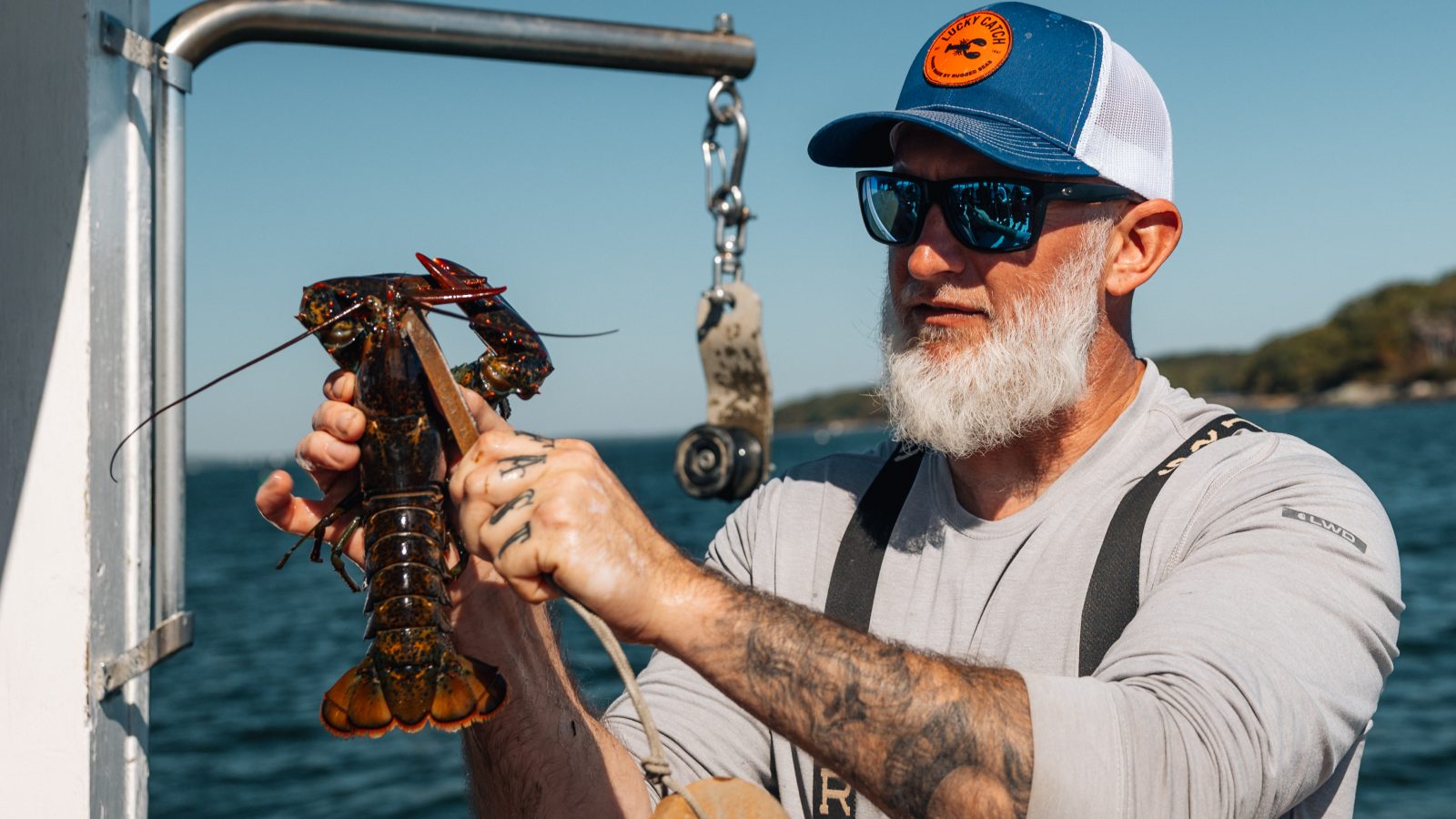
In the waters of New England, tradition meets strict regulation. Lobster fishing and oyster farming are not only symbols of local culture but are also examples of some of the best-managed fishing ecosystems in the world. Here’s how it works.
It takes years of study, humility in the face of the elements and the awareness that every poorly caught or juvenile shellfish can disrupt the delicate balance. Today, as the climate warms and the number of young fishermen declines, this ancient ethos is becoming as fragile as an oyster shell and just as valuable. For seven days, I had the opportunity to observe the American philosophy of seafood fishing at close quarters. The conclusions I drew from this visit would also provide a good starting point for a conversation about sustainable fishing in Europe.
You Can’t Buy a License
Lobster fishing in New England is strictly controlled and is one of the most tightly regulated fishing industries in the U.S. Commercial lobster fishing in Maine requires a license, and access to the profession requires several years of training in an “apprentice” program, a system in which young lobstermen learn from experienced fishermen.
“You can’t buy a license and send someone else to sea. Each of us owns our equipment, our boat and our future. We have over 3,000 miles of coastline and approximately 5,000 fishermen who sustain entire coastal communities. Without this industry, these islands couldn’t function year-round,” explains Marianne LaCroix, executive director of the Maine Lobster Marketing Collaborative.
Brilliant in its Simplicity
The regulations stipulate not only who can fish and how, but also which lobsters can be caught. The system is brilliant in its simplicity because measurement involves using a special measuring tape placed on one side, in line with the lobster’s eye socket. The other side must stop at a specific point on the body. In Maine, where 80% of the lobsters caught in the U.S. come from, the legal size for the carapace, or dorsal part of the crustacean, is between 3 1/4 and 5 inches (approx. 83–127 mm). This ensures that only mature individuals reach the table, and a single lobster can be caught and released multiple times during its lifetime. Females, which lay eggs, are also subject to special protection. Fertile females are also prohibited from being caught.
“As early as the 19th century, fishermen released females with eggs back into the water because they knew the future generation of lobsters depended on them. They also began notching the tail fin of females to mark them as breeders – if someone caught such a lobster, they had to release it. This is one of the oldest examples of legal management of sustainable fisheries in the United States,” says La Croix.
How does this work in practice? As one fisherman explains to me, “A good day is one with one lobster per trap.” Traps must allow small animals to escape, and catching crabs, for example, that accidentally find their way into lobster cages, attracted by the scent of fish bait, is also prohibited. The number of traps is also strictly limited, and each one is marked so that it can be assigned to a specific owner. This is another safeguard against overfishing.
An Aging Industry
Currently, more than 7,000 lobster licenses are issued in Maine, but fewer than half of those with licenses are actively fishing. The average age of fishermen is around 50–54, reflecting the aging industry and the difficulty of access for younger generations. This is an obvious challenge, as the lobster business is a family affair, and the future of the industry will depend not only on legal regulations but also on the willingness of today’s teenagers to follow in their parents’ footsteps.
Moreover, climate change isn’t helping the situation. “The waters off the south coast of Massachusetts are warming, so lobsters are moving north. Canada and Maine have plenty of them, but they’re dwindling here. I used to love lobster fishing – it was a passion, a hunt and an adventure. If I could make a living doing it today, I’d still be doing it. Now I’m in the oyster business; it’s the future of the south coast,” says Kerian Fennelly, co-owner of Westport Sea Farms, which now farms oysters.
Part of the Ecosystem
Massachusetts is the second state known for its lobster heritage. Although regulations aren’t as stringent as in the neighboring state of Maine, they still take exceptional care to protect the shellfish population. This also applies to oysters, which are important to the local population in New England not only as food.
“Oysters are reef-building organisms, much like coral. Over the years, they build upon each other, creating multi-layered structures composed of thousands of shells. The oldest oysters are deep beneath the surface, with younger ones growing on top of them. The result is a three-dimensional structure with thousands of nooks and crannies, teeming with life. Each oyster filters about 50 gallons of water a day. These are millions of tiny filters that cleanse the bays of algae and sediment. Reefs also slow storm surges. They act as natural embankments – if a wave encounters hundreds of these ‘blocks,’ its force is significantly reduced. This means less water pours into rivers and bays, reducing flooding,” explains Kerian Fennelly.
Fishing Only With a License
Another element of sustainable fishing policy is the licensing system. This process is lengthy and does not guarantee that a farm will be able to begin operations. Oyster owners are merely leaseholders of water in a specific area. In Massachusetts, licenses require ongoing renewal, and businesses must appear before a commission that decides whether a given company will maintain its license to farm. These licenses can be lost, for example, due to prohibited practices.
Mussels are also crucial to a balanced ecosystem. Like kelp and oysters, they purify the water of pollutants. “They’re our natural filters – they remove excess nitrogen and carbon from the sea, helping to combat eutrophication,” explains Matt Moretti, co-owner and president of Bangs Island Mussels, one of the largest mussel farms on the U.S. East Coast.
Bangs Island Mussels produces approximately 600,000 pounds of mussels annually. The farm is operated on ropes suspended directly in the ocean – the mussels grow in their natural habitat, requiring no feed or chemicals. This makes mussel farming one of the most natural ways to obtain animal protein.
Besides clams, oysters and lobsters, New England is also a mecca for scallop enthusiasts. However, scallops are a bit more demanding to farm.
“The goal is to create the same success story as with mussels: sustainable, clean farming that generates income and protects the ocean,” says Annie Simpson, co-owner of Bangs Island Mussels. For now, the company has launched a pilot farm.
Goal: Sustainable Development
While each New England farm, harbor and bay has its own unique history, they share a common approach to environmental protection and responsible production. This philosophy is embodied by the U.S. Sustainability Alliance (USSA), an organization of American food producers, farmers, fishermen and foresters who work in the spirit of sustainability. Its members share knowledge, monitor progress in ecosystem protection and promote an American production model in which caring for nature goes hand in hand with economic development. Such initiatives demonstrate that sustainable fishing and farming are no longer the domain of local communities but part of a broader strategy aimed at maintaining a balance between the sea, people and the marketplace.
Balance is Not a Utopia
For centuries, New England has lived in the rhythm of the tides. For local fishermen, the sea is not a resource but a partner – demanding yet fair. Lobsters, oysters, mussels and scallops form not only a food chain but also a web of human histories, family businesses and local traditions. Amid climate change and growing pressure on the environment, this region demonstrates that sustainable fishing doesn’t have to be utopian. Just listen to the sea before it stops speaking.
This piece is a translation of an article by Przemyslaw Ziemichod, editor-in-chief of foodservice24.pl, Poland’s leading foodservice and hospitality publication.