


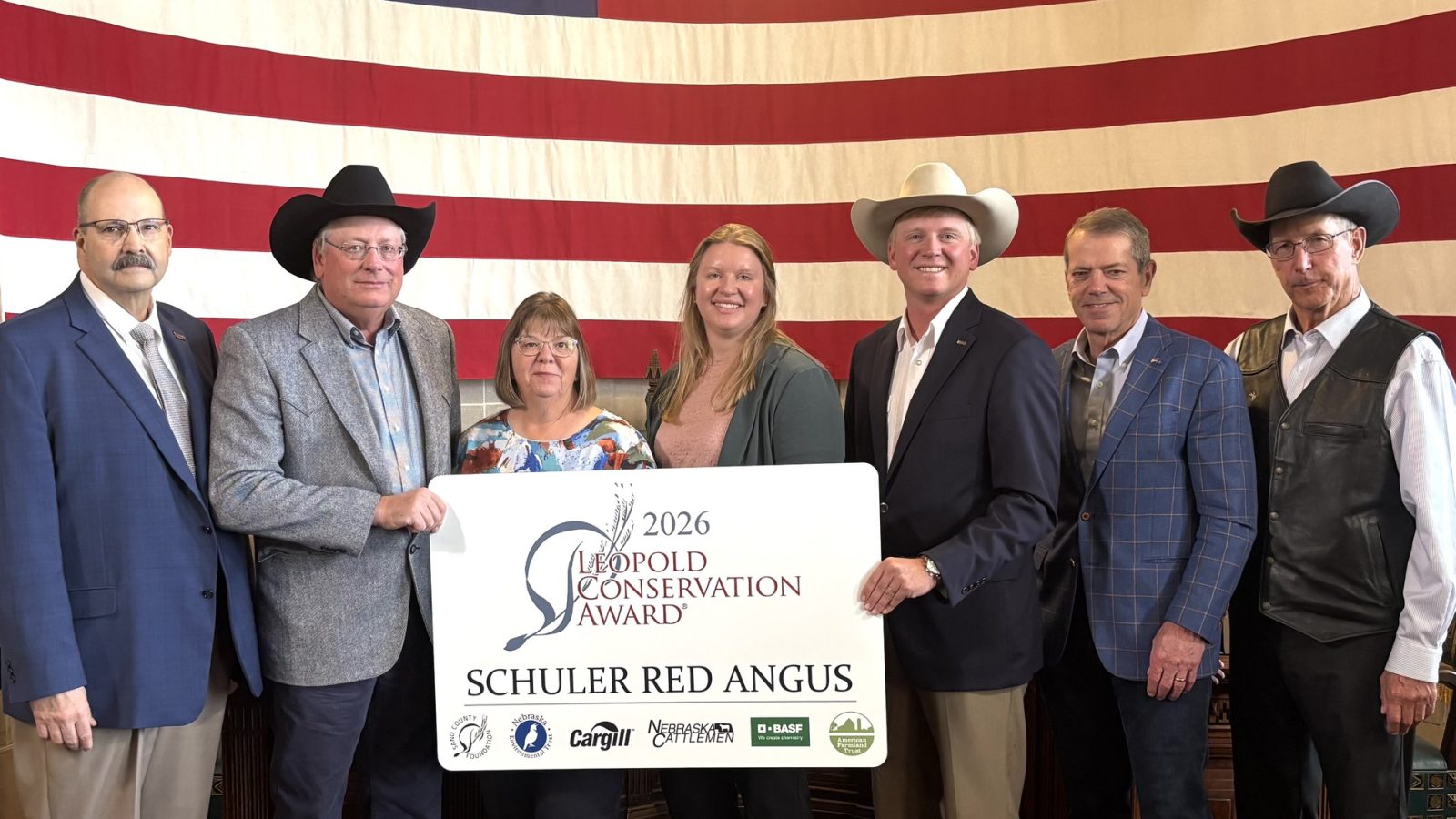
Schuler Red Angus in Bridgeport is the 2026 Nebraska Leopold Conservation Award winner. The award honors farmers, ranchers and forest landowners who go above and beyond in their management of soil health, water quality and wildlife habitat on working land.
For five generations, the Schuler family has farmed in western Nebraska with an unwavering commitment to the land. Over the past three generations, this has included owning and operating a commercial cow-calf operation.
“Schuler Red Angus represents the best of Nebraska ranching,” said Nebraska Governor Jim Pillen. “Across generations, they have remained dedicated to investing in our state’s agricultural community and its future. Our ability to provide world-class beef depends on producers like them, and we are grateful for their commitment to the long-term sustainability of our land and our industry.”
Inspired by their parents, David and Stephanie Schuler’s goal is to make Schuler Red Angus “more beautiful, efficient and sustainable for the next generation.”
The ranch is known for supplying other ranchers with high-quality live cattle and genetics. Equally impressive and distinguishing are the conservation practices the family has implemented on the unique, rugged landscape of Nebraska’s Panhandle.
Controlling Invasive Grasses
The Schulers have collaborated with public and private partners to combat invasive cheatgrass, protecting native grasses and livestock forage while reducing fire risk.
Schuler Red Angus is one of the first ranches in the region to demonstrate the effectiveness of herbicide application with the USDA Natural Resources Conservation Service. The herbicide prevents cheatgrass from going to seed for a couple of years, allowing native grasses to reestablish.
Conserving Water
Having proper pressure and shutoffs on pipelines helps the Schulers use less water. They have replaced dry wells and broken windmills with solar wells to provide water for cattle and wildlife on parts of the ranch that the pipeline doesn’t reach. Relocating some solar wells has also helped create better grazing patterns across the ranch.
Protecting Wildlife Habitat
Fitting metal bird ladders to stock tanks has helped reduce bird deaths on the ranch. At least one water tank is always left full for wildlife, even when cattle aren’t grazing in that area, while gates are left open so local wildlife, including elk and antelopes, can roam freely.
Dead and downed trees near creeks are used to create windbreaks, which provide shelter for animals during cold spells. Keeping logs and debris out of the creek’s running water also prevents log jams and cloudy, slow-flow zones.
These are just some examples of how David and Stephanie Schuler continue their parents’ legacy by caring for the land, focusing on clean water, healthy soil and thriving wildlife habitat.