

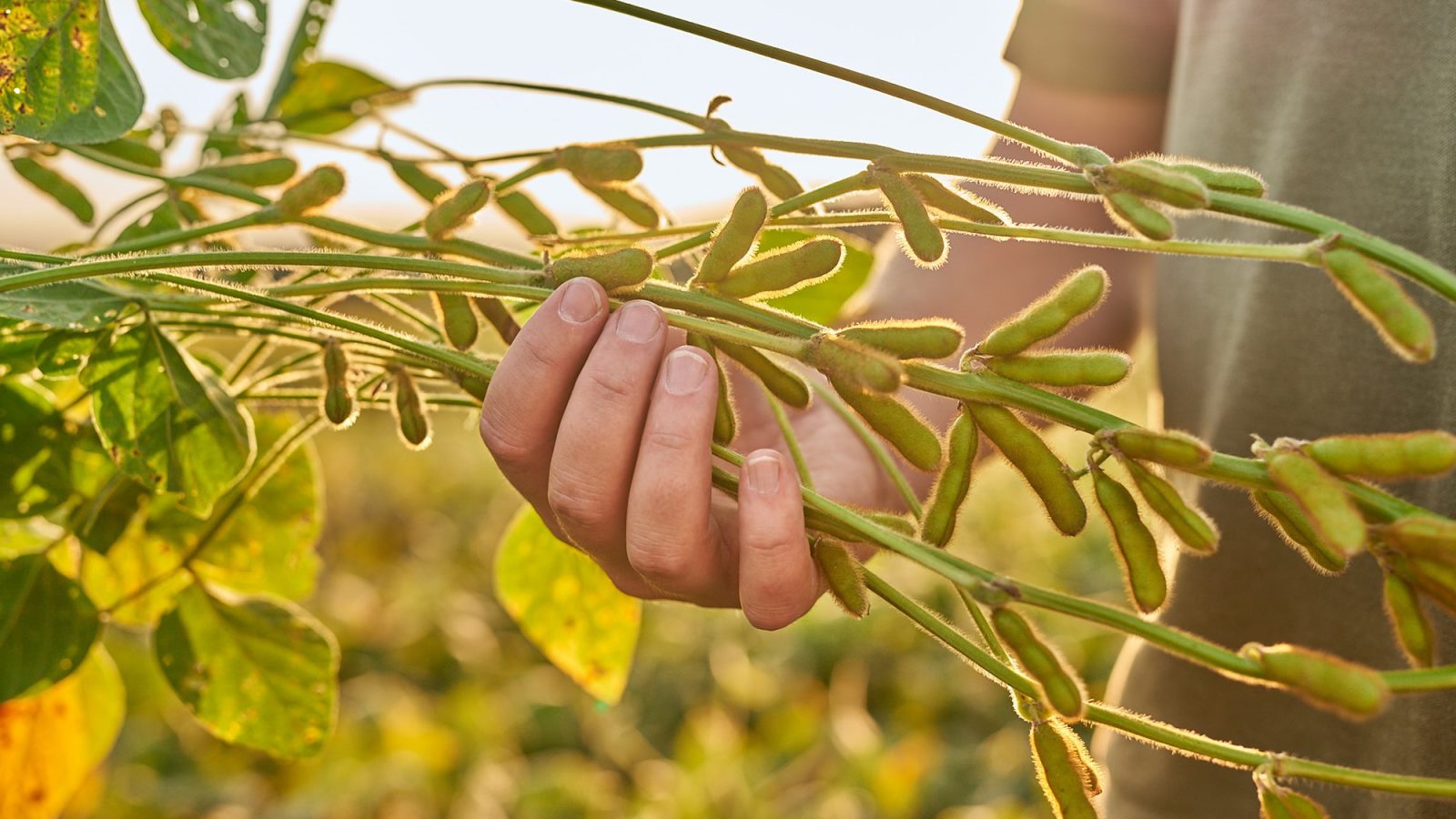
Image via U.S. Soy
In 2025, 71% of U.S. Soy exports shipped with a U.S. Soy Sustainability Assurance Protocol (SSAP) certificate, which assures customers that the soy they purchase is sustainably produced. The third annual SSAP report also reveals that 1,200 products in 22 countries are now labeled as Sustainable U.S. Soy or Fed with Sustainable U.S. Soy – a 20% increase since 2024, as more companies seek to demonstrate their commitment to responsible sourcing.
According to the report, U.S. farmers currently have the lowest carbon footprint for soybean production globally. This information is available via SSAP certificates, which can now include Global Feed LCA Institute (GFLI) carbon footprint data.
In addition, more than 207 companies have taken advantage of transferable SSAP certificates, extending sustainability verification across the entire value chain.
Jim Sutter, CEO of the U.S. Soybean Export Council (USSEC), says that the progress made in 2025 “underscores U.S. Soy’s rapidly expanding role in supporting sustainable nutrition security globally.”
“It’s exciting and encouraging to see U.S. farmers’ long-standing stewardship practices translate into measurable value and tangible results for the U.S. soy value chain,” he adds.